
Welcome to the December edition of the ACDHS Update!
As 2025 draws to a close, we reflect on a year of significant progress across allied health education, research, and sector collaboration. From national advocacy efforts and strategic engagement with partners, to strengthening our shared approach to workforce placement capacity, the past twelve months have reinforced the value of collective action.
A particular highlight has been the continued growth of the Mental Health First Aid for Health Professional Students Program, with increasing engagement across disciplines and universities. This expansion is helping build a more confident, compassionate future workforce – with further scaling planned into 2026.
ACDHS extends heartfelt thanks to our members, collaborators and partners across the allied health community. This year has brought meaningful progress through shared effort, constructive dialogue, and a shared commitment to strengthening health education, research and workforce development.
Your contributions – whether through teaching, mentoring, research, leadership, advocacy or student support – continue to make a positive difference in the lives of current and future health professionals.
On behalf of the ACDHS Board and Secretariat, we wish you a safe, restful and joyful Christmas break. May the holiday season bring you time to reconnect, recharge and reflect, and we look forward to continuing our work together in 2026.
Warm wishes to you and your families.
IN THIS ISSUE
- Feature Stories: ACDHS A Year in Review, Welcoming Adelaide University (Tirkangkaku)
- Research Highlight
- Mental Health First Aid Spotlight – Charles Sturt University
- Member Acknowledgements
- Events, Conferences, Opportunities & Resources
- Jobs Board
Feature Story
ACDHS A Year in Review – 2025

Milestones & Growth
This year saw the fruition of the national report Building Sustainable Solutions to Placement Capacity in Allied Health Education – commissioned in 2024 – which addresses the long-standing challenge of limited clinical placement capacity for allied health students. The research, undertaken by a team of five Australian universities, highlights how workforce planning, accreditation frameworks and systemic bottlenecks intersect to constrain placement opportunities. Its findings lay the foundation for long-term structural reforms aimed at securing the future allied health workforce.
We deepened our influence in policy and advocacy – underscoring the critical role of allied health in shaping sustainable, equitable health, disability and aged-care systems.
Throughout the year, ACDHS positioned allied health priorities in national policy conversations:
- Engagement continued through the federal election cycle and into the post-election period, ensuring allied health remained visible beyond the turbulence of election timing.
- With the new Parliament commencing in July, the Council emphasised the need for consistent, long-term government engagement – a point strongly echoed by members.
- ACDHS was represented at the National Registration and Accreditation Scheme (NRAS) Annual Accreditation Meeting, gaining insight into trends affecting clinical training, accreditation processes, and future workforce expansion (including the role of AI in health).
Together, these engagements strengthened ACDHS’ strategic position as the national voice for allied health education.
Strategic Engagement & Collaboration
Our involvement in the newly established National Multidisciplinary Primary Care Research, Policy and Advocacy Consortium exemplifies our commitment to integrated, evidence-based health reform. As a founding member, ACDHS is helping shape national research priorities and bring allied health perspectives into multidisciplinary care models.
We strengthened our international engagement. Notably, the joint UK-Australia-New Zealand webinar on Professional Identity and the Value of a Degree Education fostered cross-jurisdictional dialogue on the evolving role of health professionals and the importance of degree-level training.
ACDHS also contributed to national discussions on tertiary education, clinical training, and workforce reform – reflecting growing recognition of the Council’s expertise and leadership. Members reported increasing value in ACDHS acting as a coordinated, evidence-based representative body, particularly in policy and accreditation environments.
Sector Collaboration & Governance
Council participation was strong at the AGM and Member Workshop in Canberra, enabling constructive discussion across states and disciplines. Members collectively reinforced the importance of unified, consistent engagement with government and national bodies – an approach now firmly embedded in our advocacy direction.
The Board election process attracted strong participation, demonstrating the maturity and cohesion of ACDHS. Work also progressed on appointed Director arrangements to ensure balanced representation and expertise.
Strategic Issues Groups - Foundation Year
Established in July, our Strategic Issues Groups (SIGs) have already made substantial progress:
- Memberships formed and commenced regular structured meetings
- Shared problem definitions developed, laying a coherent national foundation for action
- Four SIGs submitted funding proposals for 2026 in accreditation, clinical education, early-career academic development and allied health research, now undergoing independent review
Focus on Education, Workforce & Equity
The placement capacity report has triggered important conversations about sustainable clinical training infrastructure – crucial not only for current student cohorts but for the long-term allied health workforce pipeline. The need for system-wide solutions has never been clearer and has directly informed our policy engagement throughout the year.
ACDHS continued to champion workforce diversity, equitable access, and inclusion – particularly in underserved, rural, remote and First Nations communities. These themes remain central in ongoing strategic-issues discussions and advocacy.
2025 marked another year of sustained growth in the Mental Health First Aid (MHFA) initiative delivered in partnership with MDANZ, CDNM and MHFAI. Member institutions continued to expand availability of MHFA training to allied health students, driving strong uptake, with some embedding the training into course structures. Several universities reported increased student completions, consolidation of instructor capacity, and growth in the number of disciplines engaging with the program. This ongoing commitment represents a significant contribution to student wellbeing and preparedness for practice and demonstrates the sector’s leadership in supporting mentally healthy learning environments.
Educational innovation and support for allied health students remained a priority. Through coordinated efforts, partnerships, policy work and the sharing of best practice, ACDHS reinforced its commitment to promoting excellence in allied health education nationwide.
Looking Ahead to 2026 and Beyond
Over the coming months, ACDHS will continue working with government, accrediting bodies and partner organisations to advance the recommendations emerging from the placement-capacity work, with a shared aim of translating evidence into real policy and systemic reform.
Aligned with our Strategic Plan, ACDHS will keep strengthening the national profile and influence of member institutions, while supporting pathways for early-career researchers and fostering networks for interdisciplinary and cross-sector collaboration.
Our engagement in national health reform efforts – including primary care, aged care and disability services – positions ACDHS to contribute meaningfully to the evolving landscape of Australia’s health workforce and service delivery frameworks.
We look forward to bringing our sector together in 2026 at the ACDHS Symposium in Perth, where we will also celebrate leadership and excellence through the ACDHS Allied Health Awards.
As always, none of this progress would be possible without the collective commitment of our member institutions, allied health educators, students and stakeholder partners. Thank you to everyone who has contributed throughout 2025.
We look forward to sharing further achievements and advancing our mission in the year ahead.

Welcoming Adelaide University (Tirkangkaku) – Uniting the University of Adelaide and the University of South Australia
South Australia reaches an historic milestone as the University of Adelaide and the University of South Australia formally unite from January 2026 to establish Adelaide University, carrying the Aboriginal name Tirkangkaku, meaning “Place of Learning”.
Both foundation institutions have contributed profoundly to higher education, research, and workforce development – particularly within health and allied health. The University of Adelaide has led nationally recognised medical and health research programs, while the University of South Australia has built deep expertise in practice-based education, community engagement, and interdisciplinary collaboration. Together, their strengths have advanced research translation, strengthened regional connections, and supported critical workforce needs across the health system.
The formation of Adelaide University (Tirkangkaku) represents the convergence of these complementary strengths. With expanded opportunity for interdisciplinary learning, enhanced research infrastructure, greater innovation capacity, and a broader scope for public benefit, the new institution is positioned to deliver lasting contributions to South Australian and national priorities in education and health.
ACDHS acknowledges the significant legacy of both the University of Adelaide and the University of South Australia, and looks forward to continuing strong partnership and engagement through Adelaide University (Tirkangkaku) as it begins its next chapter.
RESEARCH HIGHLIGHT

Neighbourhood Design Influences Body Weight
A Curtin University-led study has demonstrated that the environments in which people live can noticeably influence their body weight. Using 14 years of data from the HILDA survey, researchers examined individuals before and after relocating to different regions and found that local factors – such as food availability, density of takeaway outlets, walkability and access to green space – contribute meaningfully to weight variation.
The study estimates that around 15% of regional differences in weight can be explained by environmental influences rather than individual characteristics. It also found that food environments had a stronger effect than exercise opportunities, with up to half of differences in grocery and takeaway spending linked to where people live.
The findings reinforce the role of urban planning and access to healthy food in shaping community health outcomes and provide valuable insights for policy aimed at reducing obesity rates and improving population wellbeing.
Mental Health First Aid (MHFA) Spotlight
Charles Sturt University continues to demonstrate excellence in the MHFA HPS program through strong partnerships, strategic communication, and proactive engagement. With a team of 13 committed volunteer instructors and a supportive Community of Practice, CSU has built a robust and sustainable delivery model.
Close collaboration with faculty, subject coordinators and staff has helped embed mental health awareness into the student experience, promoting resilience, empathy and practical peer-support skills.
The success of the program reflects three strengths: effective communication, a dedicated instructional team supported by CSU, and strong backing from their Councils and MHFAI administration. Together, these elements ensure the program continues to meet growing mental health needs across the student community.
Key MHFA Information:
2026 Course links and flyers have been distributed. If you have not received yours, or have any queries, please contact leonie@acdhs.edu.au.
Member Acknowledgments

Professor Stacie Attrill
Adelaide University
ACDHS warmly congratulates Stacie Attrill on her promotion to Professor, effective 1 January 2026. This achievement recognises her sustained leadership, academic excellence, and deep contribution to allied health education.
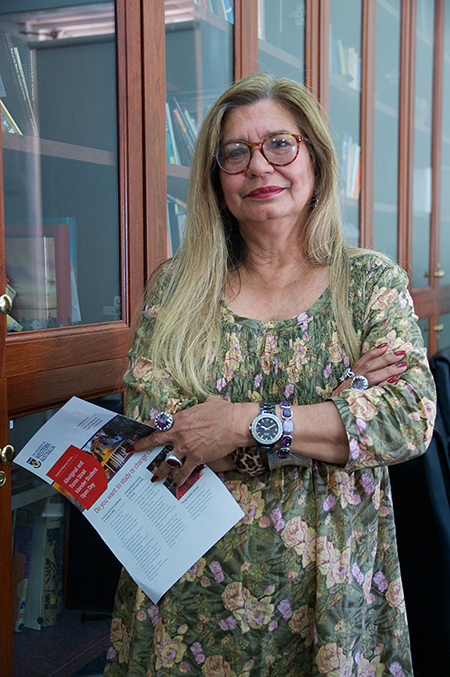
Professor Pat Dudgeon AM,
Winner – 2025 Australian Mental Health Prize
Australia’s first Aboriginal psychologist and Director of the Centre of Best Practice in Aboriginal and Torres Strait Islander Suicide Prevention at The University of Western Australia, Professor Pat Dudgeon AM has been awarded the 2025 Australian Mental Health Prize.
This recognition honours her exceptional leadership and lifelong contribution to Aboriginal and Torres Strait Islander mental health, including her work in embedding cultural, strengths-based and lived-experience perspectives into policy and services at both national and community levels.

QUT – 50 Years of Nutrition & Dietetics Education
The 2025 milestone celebrates five decades since QUT (originally QIT) first offered the Graduate Diploma in Nutrition and Dietetics in 1975.
This achievement recognises the evolution of nutrition education-from early animal-nutrition and basic computer-science roots, to today’s accredited bachelor – and honours-level courses, robust research programs and a broad range of career pathways including clinical care, community and public health, sports dietetics and Indigenous health.
We acknowledge the commitment and leadership of QUT staff, alumni and students across generations whose work in teaching, research and outreach continues to shape nutrition and dietetics locally, nationally and internationally.
Know someone we should celebrate?
Member Acknowledgements recognise significant achievements, honours, and contributions across our ACDHS community. If you, or a colleague, have recently received an award, fellowship, major appointment, or other noteworthy recognition, we would love to hear from you.
Please email brief details (and a photo if available) so we can feature them in an upcoming Update. (leonie@acdhs.edu.au)
Upcoming Events, Opportunities and Resources

Opportunities
Research Opportunity: Guideline Currency Study (Monash University)
Monash University researchers, through the Australian Living Evidence Collaboration (ALEC), are inviting Australian health professionals – including those in allied health – to contribute to a national study on the currency of clinical practice guidelines.
This brief 10-minute online survey explores how clinicians use guidelines to support patient care, their views on guideline currency, and perspectives on living guidelines. Findings from this research will help advocate for more contemporary, responsive treatment guidelines for clinicians and patients across Australia.
The study has received ethics approval from the Monash University Human Research Ethics Committee (Project ID: 49707). Further details are available in the Explanatory Statement linked on the survey page.
Health professionals are encouraged to participate and share the survey within their networks.
Survey link: https://monash.az1.qualtrics.com/jfe/form/SV_0Vd5NZB2RFvQvrg
Ability Action Australia Graduate Program
Applications: Open For 2026 intakes
Program Length: 12 months
Features: Offers structured support and career pathways for new allied health graduates.
Link: https://abilityactionaustralia.com.au/graduate-program/
Events and Conferences
- WFOT Congress 2026
Dates: 9-12 February 2026
Location: Bangkok, Thailand
Link: https://wfotcongress2026.org/registration/ - 14th Health Services Research Conference
Dates: 2-4 December 2026
Location: Wellington, New Zealand
Resources
For more than 25 years, the Australian Indigenous HealthInfoNet (a free web resource) has been helping to close the gap in health between Aboriginal and Torres Strait Islanders other Australians by making the evidence base freely accessible. It provides in one place the vast knowledge, resources and information needed for health practitioners and policy-makers to make informed decisions and support their work.
The knowledge exchange research aims at providing the knowledge and other information needed for time poor health practitioners and policy-makers to make informed decisions and deliver this in a way that is timely, accessible and relevant.
Jobs Board

VIC
- Lecturer, Speech Pathology (TF) – La Trobe
- Clinical Practitioner, Dentistry and Oral Health – La Trobe
- Lecturer, Social Work TF – La Trobe
- Clinical Practitioner, Social Work TO – La Trobe
- Lecturer, Social Work TF – La Trobe
- Senior Lecturer, Dental Education – T&R or TF – La Trobe
- Senior Lecturer, Dentistry and Oral Health – T&R – La Trobe
- Lecturer, Podiatry – La Trobe
- Lecturer, Podiatry (TF) – La Trobe
- Lecturer in Psychology, Education-focused – Deakin
- Senior Lecturer, Clinical Psychology – RMIT
- Lecturer, Clinical Psychology – RMIT
QLD
- Associate Lecturer / Lecturer in Clinical Exercise Physiology – University of Queensland
- Casual Academics – School of Psychology – University of Queensland
- Casual Academics – School of Dentistry – University of Queensland
- Principal Research Officers (Psychologists) – University of Queensland
- Professor – Nutrition and Dietetics – CQU
- Associate Professor, Clinical Exercise Physiology – UniSC
SA
WA
NSW
- Lecturer/Senior Lecturer in Occupational Therapy – University of Sydney
- Lecturer in Occupational Therapy (Education) – University of Sydney
- Lecturer – School of Dentistry – University of Sydney
- Dentistry Practitioner (Lecturer) – University of Sydney
- Lecturer (Exercise Physiology) – ACU
- Lecturer (Exercise Physiology) – ACU
- Lecturer/Senior Lecturer in Clinical Skills and Simulation Education for Pharmacy – UNSW
- Senior Lecturer – Education Focused – Psychology – UNSW
- Lecturer / Senior Lecturer – Health Sciences (Education Focused) – UNSW
- Clinical Practitioner, Social Work TO – La Trobe
Remote
- Manager Policy & Projects – ACDHS
Overseas
- Senior Lecturer, Psychology (Expertise in Clinical Psychology) – RMIT Ho Chi Minh City
- Senior Lecturer, Psychology – RMIT Hanoi
Feedback & Engagement
Have a story or research achievement to share? We’d love to hear about it!
Thank you for reading the ACDHS Update. We look forward to bringing you more inspiring stories and valuable updates next month.
Know someone who should receive the ACDHS Update?
Follow us on LinkedIn
We respectfully acknowledge the Traditional Owners of Australia’s lands and waters and their enduring connection to Country. As an education and health sciences association, we recognise the vital role of Indigenous knowledge in shaping holistic approaches to learning, wellness, and healthcare. We honour Aboriginal and Torres Strait Islander peoples, past and present, and their custodianship of knowledge embedded in the land. In paying our respects to Elders, we commit to fostering cultural understanding and partnerships for equitable and inclusive education and healthcare.