
Welcome to the September edition of the ACDHS Update.
Thank you for your continued engagement with ACDHS and for the work you do to strengthen allied health education, research and the future health workforce across Australia and Aotearoa New Zealand.
IN THIS ISSUE
- Strategic Issues Groups
- ACDHS Policy & Projects
- Tri-Nation Collaboration Event
- Help Us Build the ACDHS Photo Library
- Feature Story: Physio-Led Emergency Care Cuts Wait Times
- Research Roundup: National Primary Care Consortium Moves from Collaboration to Evidence
- Mental Health First Aid Update: Important Dates
- Allied Health Professions Day
- Universities Australia Calls for Greater Cost-Of-Living Support for Students
- Free Paediatric Chronic Pain Education for Health Professionals
- World Occupational Therapy Week 2026
- Upcoming Events, Conferences and Opportunities
- Jobs Board
Strategic Issues Groups
Allied Heath Clinical Education Community of Practice
Interest in the Allied Health Clinical Education Community of Practice (CoP) continues to grow, with membership now exceeding 150 participants from across Australia and New Zealand. Since its establishment, the CoP Leadership Group has met on two occasions and is actively preparing for the first Community of Practice event, scheduled for 1 October 2026.
We are delighted to welcome Dr Lisa Simmons as Chair of the CoP. Lisa is a Senior Lecturer in Health Professional Education within James Cook University’s College of Medicine and Dentistry and an Accredited Clinical Exercise Physiologist. Her expertise spans clinical education, educator development and health workforce research, with a particular interest in improving educational outcomes and strengthening allied health capacity in regional and rural settings.
The upcoming CoP meeting will provide an opportunity for members to share ideas, build connections and contribute to the ongoing development of clinical education practice across the allied health professions.
Regulation and Accreditation Issues Strategic Issues Group
The Regulation and Accreditation Issues Strategic Issues Group is moving forward with an ACDHS-funded research initiative focused on the role of graduate outcome measures in health professional accreditation. The project will investigate how indicators such as effectiveness, safety and cultural safety can be meaningfully integrated into accreditation frameworks and processes.
Through consultation and research, the group aims to develop a practical framework that supports the inclusion of outcomes-based measures in accreditation systems, helping to strengthen quality improvement across health professional education and workforce development. Expressions of interest are currently being sought from individuals who would like to join this strategic issues group. This is an excellent opportunity to collaborate with colleagues from across the sector and help inform future approaches to regulation, accreditation and quality assurance.
To get involved, please contact Anne Keohane at strategicsupport@acdhs.edu.au.
ACDHS Policy & Projects
Strategic Plan Renewal
Thank you to all members who have contributed to the renewal of ACDHS’s strategic plan. Your input is helping to shape the next phase of ACDHS’s work and priorities. ACDHS is continuing to progress the strategic plan renewal and will advise members of a further opportunity to contribute to the next iteration in the coming weeks, ahead of its finalisation and approval.
Policy Development
ACDHS continues to progress work on internal policy development in two areas:
- Scope of Representation: when and where ACDHS engages on issues of value to our members and where it may be of value only to 1-2 or where a national discipline specific peak may be the appropriate advocate
- New Zealand Polytechnics: work to support consideration on a case by case of membership requests from Polytechnic institutions in an Associate Member category in the Constitution.
Allied Health Professions Australia (AHPA) Policy Symposium
AHPA is hosting a Policy symposium for their members in Melbourne on Thursday 15 October, focusing on strengthening government relations strategies. ACDHS will be represented at the symposium to engage with stakeholders, strengthen relationships and identify opportunities for collaboration.
Tri-Nation Collaboration Event
On Wednesday 23 September, this month’s online event brought together over 50 members from the Council of Deans of Nursing and Midwifery (Australia and New Zealand), Australian Council of Deans of Health Sciences and the Council of Deans of Health (UK) for a focused cross-sector conversation on reasonable adjustments for students in practice learning settings. Elizabeth Williams from Deakin University presented in the session, exploring leading and inclusive practice approaches to reasonable adjustments to support students with disabilities and diverse needs to fully participate in their education. The session also explored the growing complexity of ensuring students are appropriately supported, while also recognising the needs and responsibilities of universities and placement providers.
Members discussed perspectives and practice from New Zealand, Australia and the United Kingdom in breakout sessions, which delved into key topics including:
- The nature of the relationship between university and student.
- The role of the practical placement provider as a workplace, with responsibilities to its staff, patients and students.
- The requirement to provide reasonable adjustments during placement, including the question of who should cover the costs.
- The core issue of what are reasonable adjustments and whether the adjustments a university can offer are practical or possible in a clinical placement setting.
- The complexity of balancing student and service needs were discussed, including scenarios where it may not be possible or reasonable to accommodate requests.
- The importance of considering different contexts in this was considered, including the nature of small private practices compared to large public health systems, which adds complexity.
- Approaches across contexts and opportunities to share lessons learned.
The legal origins of what is reasonable were recognised along with the duty of care to students and the importance of understanding students’ needs when they enrol in a course and throughout. The session highlighted the importance of universities understanding individual student needs and developing tailored support plans, recognising that practical placement settings are dynamic environments that may change significantly over the course of degrees.
Overall, the session was a collaborative opportunity for members to share experiences, discuss issues, compare approaches and share examples of leading practice.
Key resources shared include:
- ADCET Academy Universal Design for Learning in tertiary settings
- Disability Inclusion in Health Professions Education
- ACSES Insights Report on Disability in Higher Education – Stage 1: Stocktake of public information on disability in Australian universities
- Medical Deans Disability Inclusion: Self-Assessment Tool
Help Us Build The ACDHS Photo Library
ACDHS is redeveloping our website and digital capability and as part of that we want to develop our own photo library to better showcase the breadth of allied health education, research and practice across Australia and New Zealand.
We’re inviting members to contribute high-quality photographs that ACDHS may use in future Updates, on our website, social media and other communications. Images might feature students and educators, teaching and simulation environments, research activities, placements, events, facilities, or allied health professionals in practice.
Before submitting photographs, please ensure that your university or organisation owns the image or has permission to share it with ACDHS, and that appropriate consent has been obtained from any identifiable people pictured for the proposed communications and promotional use.
If you have suitable images you’d be happy for ACDHS to add to our growing photo library, we’d love to receive them. Please send them to leonie@acdhs.edu.au including the submission/permission form.

Feature Story
Physio-Led Emergency Care Cuts Wait Times

New Australian research is highlighting how greater use of allied health expertise could help ease pressure on the nation’s crowded emergency departments.
A major randomised controlled trial led by researchers at the University of Sydney has found that physiotherapist-led care for patients presenting with musculoskeletal conditions can substantially reduce waiting and treatment times – without compromising patient safety or clinical outcomes.
Published in The Lancet, the RESHAP-ED trial involved 1,491 patients across five NSW emergency departments. Patients presenting with conditions including back pain, fractures, dislocations and joint injuries received either standard care or physiotherapist-led care.
The results were significant. Patients receiving physiotherapist-led care spent an average of one hour less in the emergency department, were assessed 40 minutes sooner, were three times more likely to be seen within recommended triage timeframes and reported higher satisfaction with their care.
Importantly, these improvements did not come at the expense of clinical outcomes, with no compromise found in measures including pain, quality of life or adverse events.
An economic evaluation estimated that implementing the model across NSW emergency departments could save hospitals approximately $19 million annually and release more than 540,000 hours of emergency department capacity each year.
Rethinking the allied health workforce
With more than 1.3 million Australian emergency department presentations each year associated with musculoskeletal conditions, the findings have significant implications for health workforce planning.
The study demonstrates the potential benefits of enabling allied health professionals to work to their full scope of practice and reconsidering how expertise is deployed across the health system.
It also has implications for universities preparing the future allied health workforce. As expanded and advanced-practice models become increasingly important, graduates will need the capabilities to work effectively within multidisciplinary teams and across a broader range of clinical settings.
The RESHAP-ED trial provides a strong example of how allied health workforce innovation can improve patient experience while increasing health-system capacity and productivity – and highlights the important role of education in preparing graduates for evolving models of care.
Research Roundup
National Primary Care Consortium Moves from Collaboration to Evidence

Almost a year after ACDHS reported on the launch of the National Multidisciplinary Primary Care Research, Policy and Advocacy Consortium, the five-year MRFF-funded collaboration has moved into its next phase – identifying the evidence needed to strengthen multidisciplinary team-based primary care across Australia.
In July, the Consortium’s 2026 Strategic Think Tank brought together leaders from research, policy and practice to examine emerging findings, identify evidence and research gaps, and consider how research can be translated into primary care reform.
The Consortium’s work is addressing questions of particular relevance to allied health, including which multidisciplinary models deliver the strongest health and workforce outcomes, the components of high-quality and equitable team-based care, and the feasibility, cost-effectiveness and scalability of different approaches.
With 100 investigators participating nationally, the $5.2 million MRFF-funded Consortium will continue its research through 2029, with findings intended to provide evidence-based guidance for future Australian primary care reform.
Mental Health First Aid (MHFA) Update
2027 voucher requests – due 9 October
Universities intending to participate in the Mental Health First Aid program in 2027 are reminded to submit their 2027 voucher requests by Friday 9 October 2026. Please ensure your request reflects the anticipated number of students who will undertake the MHFA eLearning program next year.
2026 eLearning – final dates
With the 2026 program drawing to a close, please also note these important deadlines for students using their current 2026 allocation:
- Monday 7 December 2026 – final date for students to enrol in the 2026 eLearning modules.
- Friday 11 December 2026 – final date for enrolled students to commence their 2026 eLearning.
Universities are encouraged to continue promoting the program and following up with students who are enrolled but have not yet commenced, or who have commenced but not yet completed, to maximise use of their 2026 allocation.
Allied Health Professions Day 2026
14 October 2026

Allied Health Professions Day is an opportunity to recognise the vital contribution allied health professionals make to the health and wellbeing of Australians – but recognition must be matched by action.
Australia needs a sustainable pipeline of highly skilled allied health professionals to meet growing demand across health, disability, aged care and community services.
Universities are central to building that workforce, but increasing graduate numbers cannot happen in isolation. We need coordinated national workforce planning that connects education and training capacity, clinical placements, workforce demand and health service reform.
Recent progress on extending Commonwealth Prac Payments to additional allied health students is welcome. The next step is ensuring Australia has the education and clinical training capacity needed to develop the workforce our communities will require.
On Allied Health Professions Day, ACDHS calls for allied health education to be embedded in national workforce planning from the outset – Allied health: For everyone, everywhere.
We encourage you to join us in supporting AHP’s Day 2026 and raise awareness of the allied health sector by sharing your own social media posts. Be sure to use the hashtags #AHPsDay2026 #AlliedHealthEverywhere #AlliedHealth4Everyone.
Resources Coming Soon: https://www.ahpa.com.au/allied-health-professions-day
Universities Australia Calls for Greater Cost-Of-Living Support for Students

Universities Australia is calling on the Australian Government to provide concession cards to all domestic university students, as rising living costs place increasing pressure on students. Its analysis shows student rents have risen by around 40% since 2021, groceries by 27%, utilities by 39% and fuel by 43%, while recent research found one in three university students surveyed were experiencing financial insecurity. Universities Australia is also advocating for international students to receive the same access to public transport concessions as domestic students, regardless of where they study. The organisation argues that improving affordability will be critical to widening participation in higher education and ensuring students can remain at university and complete their studies.
Free Paediatric Chronic Pain Education for Health Professionals

A new free online course is available for health professionals and educators seeking to strengthen their knowledge of chronic musculoskeletal pain in children and adolescents.
Developed by pain scientists and allied health and medical leaders, the Kids Leg Pain Course provides seven hours of core learning in paediatric chronic pain, with approximately 10 additional hours of optional condition-specific education.
The flexible, self-paced course covers contemporary pain science, person-centred communication and evidence-informed chronic pain management, and participants receive a certificate of completion.
Developed with support from the Australian Government’s Medical Research Future Fund, the course is currently available free of charge for a limited time and is designed primarily for qualified health professionals and educators.
World Occupational Therapy Week 2026
26 October – 1 November 2026
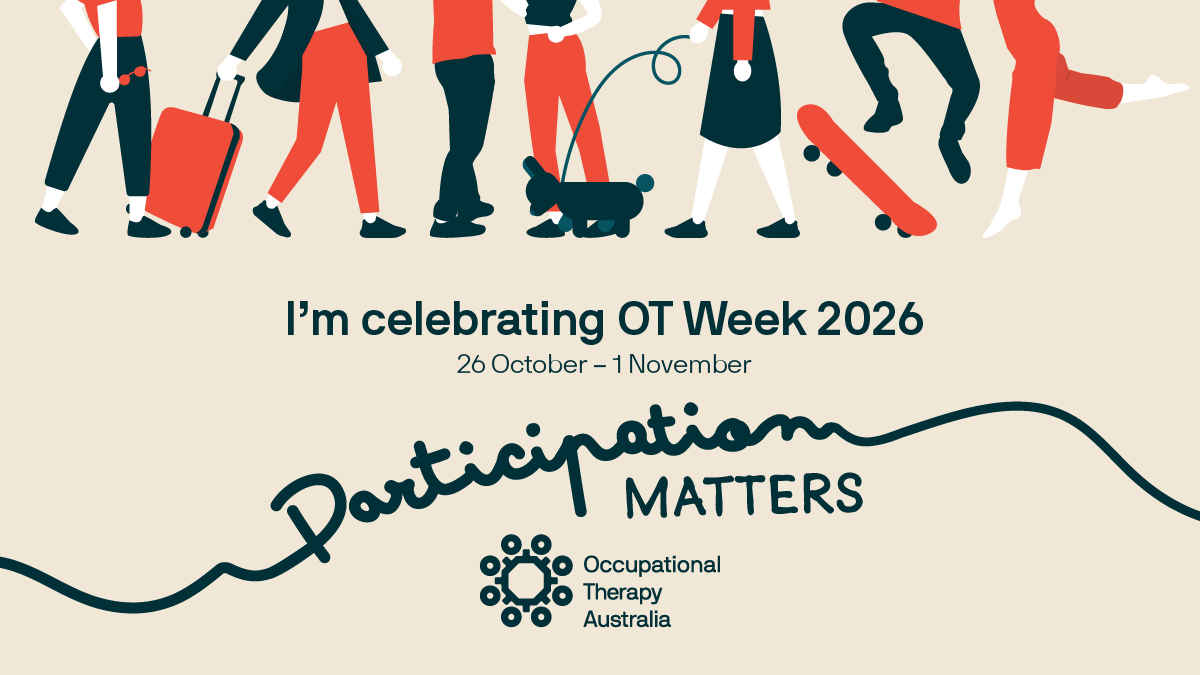
World OT Day: 27 October
OT Week is the annual celebration of the extraordinary impact occupational therapists make every day.
This year’s theme, Participation Matters, puts a spotlight on one of the foundations of occupational therapy – the understanding that being able to participate in life is fundamental to our health, wellbeing and sense of belonging.
Participate here: https://otaus.com.au/ot-week-2026
Upcoming Events, Conferences and Opportunities
Events
- FPM National Pain Education Summit 2026
Dates: 1 October 2026
Location: Melbourne - Council of Deans of Health (UK) Autumn Conference 2026
Dates: 13-14 October 2026
Location: Leeds, UK - SARRAH 2026 – 16th National Conference for Rural and Remote Allied Health
Dates: 9-11 November 2026
Location: Coffs Harbour - IAHA National Conference
Date: 30 November – 2 December 2026
Location: Boorloo/Perth - 14th Health Services Research Conference
Dates: 2-4 December 2026
Location: Wellington, New Zealand - 5th International Indigenous Health and Wellbeing Conference
Dates: 8-10 June 2027
Location: Garramilla (Darwin)
Resources
- Te Awa Tārai – A Career Development Guide for Allied Health – Hauora Haumi
This provides a thoughtful framework for recognising diverse pathways, building skills, reflecting on professional growth and planning future development. It highlights stages of career progression and encourages reflective practice and ongoing skill enhancement that many in our sector will find useful in shaping their own career journeys. - AHANZ Members’ Advocacy Kit 2026
As Aotearoa heads toward the 2026 General Election (07 November 2026), AHANZ is strengthening its advocacy to ensure allied health is fully integrated into health system planning and investment. We need members alongside us. Your voice, experience and community trust make the strongest case for change. - Allied Health Digital Hub
Designed to help allied health professionals understand, access and adopt digital health products, the Hub brings together the resources you need to navigate Australia’s evolving digital health landscape.
Jobs Board

VIC
QLD
- Lecturer/Senior Lecturer – Nutrition and Dietetics – QUT
- Clinical Practice Educator, Nutrition and Dietetics – UniSC
- Associate Professor / Assistant Professor – Nutrition & Dietetics – Bond Uni
- Associate Professor / Assistant Professor in Occupational Therapy (Teaching Focused) – Bond
- Research Fellow – Nutrition and Dietetics – UQ
- Associate Lecturer/Lecturer – Occupational Therapy – CQU
- Associate Professor or Professor (Speech Pathology) – UniSQ
WA
- Physiotherapist – Edith Cowan
SA
- Senior Lecturer in Pharmacy – Flinders
- Associate Lecturer in Paramedicine (Clinical Facilitator) – Flinders
- Lecturer, Speech Pathology – University of Adelaide
NSW
- Dental Resident – Charles Sturt
- Lecturer in Physiotherapy (Neurology) – Charles Sturt
- Senior Lecturer/Associate Professor/Professor of Clinical Exercise Physiology – Charles Sturt
- Dentistry Practitioner (Lecturer/Senior Lecturer) – Sydney Dental School – University of Sydney
- Post-Doctoral Fellow (Exercise Physiology) – UNSW
- Lecturer (Physiotherapy Clinical Educator) – UNSW
- Associate Lecturer/Lecturer – Exercise Physiology – UNSW
Know someone (or something) we should celebrate?
Member Acknowledgements recognise significant achievements, honours, and contributions across our ACDHS community. If you, or a colleague, have recently received an award, fellowship, major appointment, or other noteworthy recognition, we would love to hear from you.
Please email brief details (and a photo if available) so we can feature them in an upcoming Update. (leonie@acdhs.edu.au)
Feedback & Engagement
Have a story or research achievement to share? We’d love to hear about it!
Thank you for reading the ACDHS Update. We look forward to bringing you more inspiring stories and valuable updates next month.
Know someone who should receive the ACDHS Update?
Follow us on LinkedIn
We respectfully acknowledge the Traditional Owners of Australia’s lands and waters and their enduring connection to Country. As an education and health sciences association, we recognise the vital role of Indigenous knowledge in shaping holistic approaches to learning, wellness, and healthcare. We honour Aboriginal and Torres Strait Islander peoples, past and present, and their custodianship of knowledge embedded in the land. In paying our respects to Elders, we commit to fostering cultural understanding and partnerships for equitable and inclusive education and healthcare.