
Welcome to the April edition of the ACDHS Update, bringing together key developments, opportunities and sector insights from across the allied health education community.
This month we are pleased to launch Expressions of Interest for the new ACDHS Expert Advisory Panel, inviting experts from across member universities to contribute their knowledge and experience to help inform national policy, research and advocacy.
The Update also highlights continuing sector advocacy around Commonwealth Prac Payments, with growing national support for expanding financial assistance for students undertaking mandatory clinical placements. We also draw attention to the public consultation on the redesign of psychology training pathways, an important development with potential implications for workforce supply and education models.
Our Feature Story this month explores innovative research examining new ways to deliver multidisciplinary pain care in rural communities, while the Research Roundup highlights new evidence on strengthening the rural allied health workforce. We also share updates from Mental Health First Aid, opportunities to contribute to a national survey on the value and impact of allied health, and information about upcoming events, conferences and sector opportunities.
As always, we encourage members to share these updates across their networks and to continue engaging with the important work shaping the future of allied health education and workforce development.
IN THIS ISSUE
- ACDHS Expert Advisory Panel: Apply Now & Share
- Strategic Issues & Policy Focus
- Sector/Policy Update
- Feature Story: Testing New Ways to Deliver Pain Care in Rural Communities
- Research Roundup: Supporting the Future of Australia’s Rural Allied Health Workforce
- Have Your Say: Allied Health Professionals Invited to Contribute to National Survey
- National Reconciliation Week
- Events, Conferences, Opportunities & Resources
- Jobs Board
ACDHS Expert Advisory Panel
Apply Now and Share: EOIs now open
We are now inviting Expressions of Interest (EOIs) from experts across member universities to join a new Expert Advisory Panel.
This is an exciting chance to contribute expertise and experience to shape national policy, research, and advocacy and help drive leadership across the allied health sector. Benefits of joining the Panel include:
- Increased visibility through inclusion on the ACDHS website as a recognised Panel Member.
- Opportunities to demonstrate Allied Health sector leadership and to connect and collaborate with leading experts across Australia and New Zealand.
- Recognition of contributions, with appropriate attribution to participating Panel Members and their home institutions where applicable.
You can find out more about what’s involved and submit your interest via a short online EOI form below:
Apply now or share with your network. EOIs are due by 5:00pm, Friday 1 May.
For more information, contact Esther Manning – e.manning@acdhs.edu.au.
Strategic Issues and Policy Focus
Strategic Issues Groups
Preparations are underway for the establishment of the Allied Health Clinical Education Community of Practice (CoP), with member input on objectives and focus areas to be sought at the Melbourne workshop on 1 May.
Other notable updates include the Rural, Remote and First Nations Workforce Group’s work on best‑practice examples and case studies to strengthen First Nations Cultural Safety.
All Strategic Issues Groups (SIGs) will provide updates at the 1 May members’ workshop, outlining current focus areas, what has worked well, and where further refinement is needed.
If you would like to be involved in one of the SIGs, please contact Anne Keohane strategicsupport@acdhs.edu.au.
Sector/Policy Updates
Commonwealth Prac Payments – Sector Advocacy
Advocacy continues across the health and education sectors regarding financial support for students undertaking mandatory placements. A national petition is currently calling for expanded Commonwealth Prac Payments to help address the financial pressures experienced by many students during extended periods of unpaid clinical placement.
Since our last update, the petition has reached over 27,000 signatures. However, further support is needed to reach the goal of 50,000 signatures.
Members are encouraged to continue sharing the petition across their networks to amplify its impact, build momentum, and support efforts to reduce placement poverty and strengthen Australia’s future allied health workforce.
Public Consultation: Redesign of Psychology Training Pathway
The Psychology Board of Australia has released a public consultation paper on a proposed redesign of the higher-degree pathway for psychologists in Australia.
The proposal explores the introduction of a single five-year professional psychology degree leading to general registration, replacing the current multi-pathway model. The aim is to streamline training, introduce practical skills earlier in the degree, reduce barriers to entry, and strengthen workforce supply in response to increasing community demand for psychological services.
The proposed model would also introduce a potential Bachelor of Psychological Assistance exit pathway after three years, supporting the development of a psychology assistant workforce under supervision.
Stakeholders are invited to provide feedback as part of the public consultation process.
Consultation closes: 10 June 2026
Further information and submission materials are available here.
Feature Story
Testing New Ways to Deliver Pain Care in Rural Communities

Researchers at the University Centre for Rural Health (UCRH) are testing new ways to improve pain care for people living in regional and rural communities, where access to multidisciplinary services can be limited.
The Healthy Lifestyle Program for Pain in Rural Areas (HeLP-R) trial is exploring how integrated pain management and lifestyle support can help people experiencing chronic musculoskeletal pain, including persistent back, knee and hip pain.
The program combines physiotherapy-led pain management with support for lifestyle factors that can influence persistent pain, such as physical activity, diet, smoking and sleep.
The study is comparing two models of care. One group participates in an in-person program delivered by physiotherapists, while another receives a virtual multidisciplinary program via telehealth, involving a team that may include physiotherapists, dietitians, psychologists and smoking cessation specialists.
By comparing these approaches, the research aims to better understand how virtual and blended models of care might help address access barriers for people living in rural communities.
The study is being delivered across regional New South Wales, including Port Macquarie, Coffs Harbour, Grafton and Lismore and is funded through the Australian Government’s Medical Research Future Fund.
If successful, the findings could help inform new approaches to delivering accessible, multidisciplinary pain care across rural Australia.
Research Roundup
Supporting the Future of Australia’s Rural Allied Health Workforce
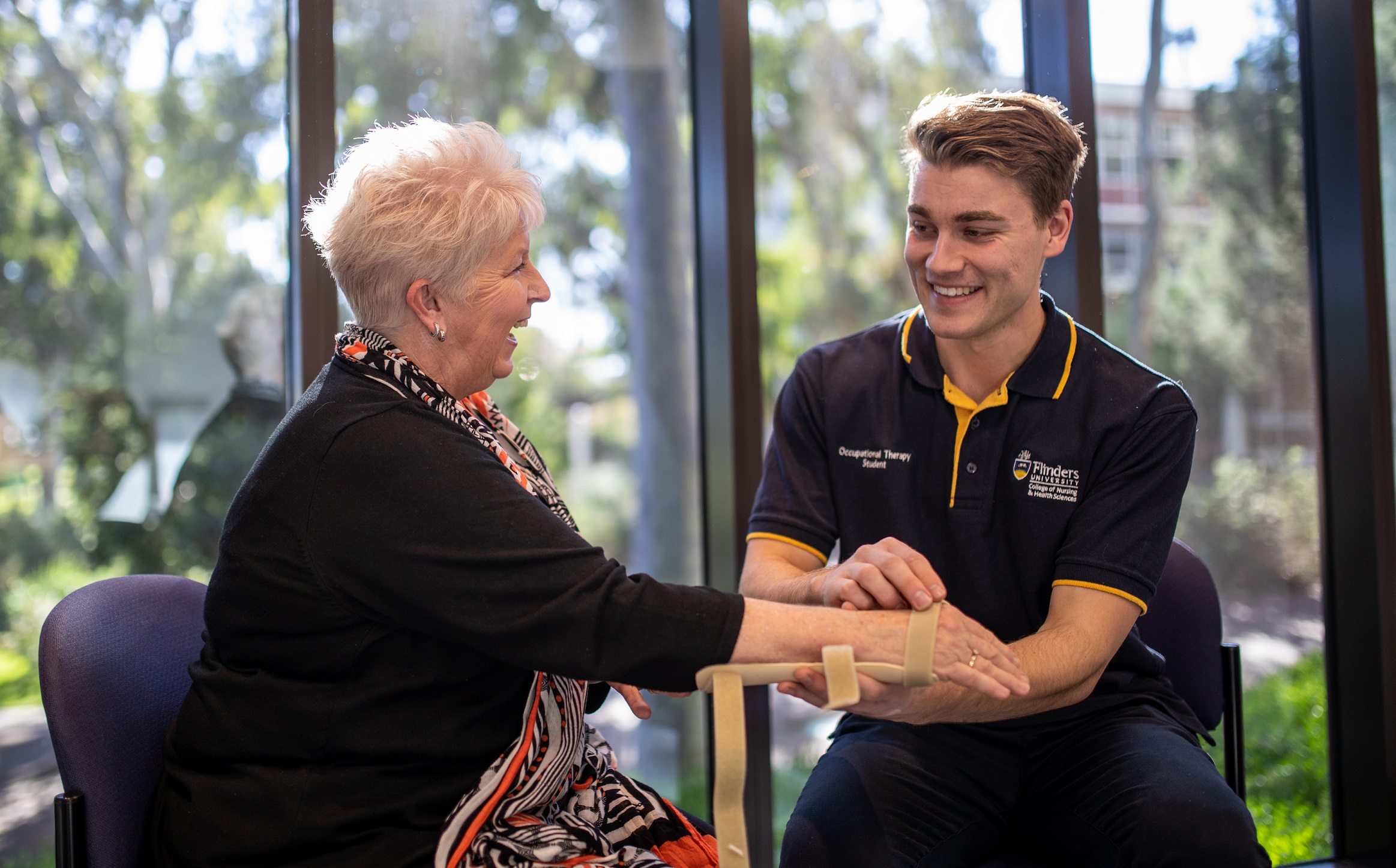
New research from Flinders University highlights the importance of targeted support programs to strengthen Australia’s rural allied health workforce and improve healthcare access for regional communities. The study explored factors influencing recruitment and retention of allied health professionals – including physiotherapists, occupational therapists, podiatrists and pharmacists – in rural and remote settings.
The research found that professional training alone is not enough to ensure workforce stability. Instead, factors such as community integration, manageable workloads and well-timed professional development opportunities play a critical role in helping practitioners build sustainable careers in regional areas. As lead researcher Dr Ali Dymmott explains: “It’s not simply about offering training; it’s about creating the right environment for allied health professionals to thrive in rural settings.”
The findings reinforce the need for workforce initiatives that support early-career clinicians while also strengthening connections between practitioners and the communities they serve. With many rural regions experiencing persistent workforce shortages, the research highlights practical strategies to encourage allied health professionals to both take up and remain in regional roles.
Mental Health First Aid (MHFA) Update
National MHFA Summit 2026
One movement. Many voices.
Mental Health First Aid invites you to join us for the first-ever national gathering of the MHFA movement.
This two-day summit brings together Instructors, MHFAiders, providers, workplaces and friends of MHFA to connect, exchange knowledge and strengthen our collective impact across Australia.
This is a space for building connections, purpose-driven learning, shared experiences and real-world tools to deepen your practice and expand the movement.
When: Tuesday 1 September – Wednesday 2 September 2026
Where: Melbourne Cricket Ground (MCG), Melbourne
Have Your Say
Allied Health Professionals Invited to Contribute to National Survey

Allied health professionals across Australia are being invited to take part in a new survey exploring how the ‘value’ and ‘impact’ of allied health are understood, measured, and communicated.
The study aims to capture perspectives from across the allied health workforce to help inform future discussions about the role, contribution and recognition of allied health within the health system.
Participants are eligible if they are:
- an allied health professional recognised by Allied Health Professions Australia,
- an allied health professional recognised within their state or territory, or
- working in a leadership role in allied health, regardless of profession.
The survey is conducted online via Qualtrics, takes approximately 15–20 minutes to complete, and responses are anonymous.
The research has been approved by the University of South Australia Human Research Ethics Committee and is being led by University of Adelaide.
ACDHS encourages members and their networks to consider contributing their perspectives.
For further information, please contact the Chief Investigator, Esther Tian, at jie.tian@adelaide.edu.au.

National Reconciliation Week 2026
27 May – 3 June 2026
National Reconciliation Week (NRW) is a time for all Australians to learn about our shared histories, cultures, and achievements, and to explore how each of us can contribute to achieving reconciliation in Australia.
Show your support this National Reconciliation Week (NRW) – 27 May to 3 June – by downloading and displaying the National Reconciliation Week 2026 resources.
Upcoming Events, Conference and Opportunities
Events

- 2026 ACDHS AGM and Member Workshop
Dates: 30 April – 01 May 2026
Location: Melbourne - Council of Dean of Health (UK) Spring Conference
Date: 19 May 2026
Location: London, UK - Council of Deans of Health (UK) Skills Summit
Date: 4 June 2026
Location: London, UK - SPA 2026 Conference
Dates: 25 June – 27 June 2026
Location: Gold Coast - Australia, New Zealand Association for Health Professional Educators – 2026 Conference
Dates: 29 June – 2 July 2026
Location: Ōtautahi Christchurch, Aotearoa New Zealand - National MHFA Summit 2026
Dates: 1 – 2 September 2026
Location: Melbourne - IAHA National Conference
Date: 30 November – 2 December 2026
Location: London, UK - 14th Health Services Research Conference
Dates: 2-4 December 2026
Location: Wellington, New Zealand
Opportunities
- Call for Abstracts Open – 14th Allied Health Services Research Conference
Deadline: 7 May 2026
Submit: https://eventstudio.eventsair.com/hsr-2026/ - Call for Abstracts – Indigenous Allied Health Australia 2026
Deadline: 29 May 2026
Submission Guidelines: https://iaha.com.au/wp-content/uploads/2026/03/2026-Abstract-Guildlines.pdf - Ability Action Australia Graduate Program
Applications Open For 2026 intakes
Program Length: 12 months
Features: Offers structured support and career pathways for new allied health graduates.
Resources
Allied Health Digital Hub:
Designed to help allied health professionals understand, access and adopt digital health products, the Hub brings together the resources you need to navigate Australia’s evolving digital health landscape.
Jobs Board

VIC
QLD
- Casual Academics – School of Psychology – University of Queensland
- Clinical Supervisor – Psychology (Clinical Senior Teaching Fellow) E.O.I. – Bond University
- Casual Academics – Occupational Therapy – Bond University
- Lecturer in Occupational Therapy – Southern Cross University
WA
- Lecturer – Social Work & Social Policy – University of Western Australia
- Exercise Physiologist – Expressions of Interest – Edith Cowan University
NSW
- Lecturer – Speech Pathology – University of Sydney
- Lecturer in Psychology – University of Sydney
- Research Associate – Psychology – UNSW
- Head, School of Allied Health, Exercise and Sports Sciences – Charles Sturt University
New Zealand
- Professional Teaching Fellow – School of Psychology / Te Kura Mātai Hinengaro – University of Auckland
Overseas
- Faculty Openings in Health and Social Sciences – Singapore Institute of Technology – Singapore
- Associate Professor/Assistant Professor in Psychology, Counselling, and Allied Disciplines – O.P. Jindal Global University – India
Know someone (or something) we should celebrate?
Member Acknowledgements recognise significant achievements, honours, and contributions across our ACDHS community. If you, or a colleague, have recently received an award, fellowship, major appointment, or other noteworthy recognition, we would love to hear from you.
Please email brief details (and a photo if available) so we can feature them in an upcoming Update. (leonie@acdhs.edu.au)
Feedback & Engagement
Have a story or research achievement to share? We’d love to hear about it!
Thank you for reading the ACDHS Update. We look forward to bringing you more inspiring stories and valuable updates next month.
Know someone who should receive the ACDHS Update?
Follow us on LinkedIn
We respectfully acknowledge the Traditional Owners of Australia’s lands and waters and their enduring connection to Country. As an education and health sciences association, we recognise the vital role of Indigenous knowledge in shaping holistic approaches to learning, wellness, and healthcare. We honour Aboriginal and Torres Strait Islander peoples, past and present, and their custodianship of knowledge embedded in the land. In paying our respects to Elders, we commit to fostering cultural understanding and partnerships for equitable and inclusive education and healthcare.